
Exploring Data Warehousing in Microsoft Fabric
Data Warehousing

Hello all,
In this issue, we'll dive into the world of data warehousing in Microsoft Fabric, a comprehensive data platform that offers a wide range of capabilities for data professionals.
What is a Data Warehouse?
A data warehouse is a centralized repository of data that is designed for query and analysis rather than for transaction processing. It is a critical component of any modern data analytics strategy, as it enables organizations to store, process, and analyze large volumes of data from various sources.
Data Warehousing in Microsoft Fabric
Microsoft Fabric offers a powerful data warehousing solution that is built on top of Azure Synapse Analytics. With Fabric, you can create and manage data warehouses with ease, and use T-SQL to query and analyze your data.
One of the key benefits of using Fabric for data warehousing is its ability to handle large volumes of data with ease. Fabric can scale up to handle petabytes of data, making it an ideal solution for organizations with large data warehousing needs.
Creating a Data Warehouse in Fabric
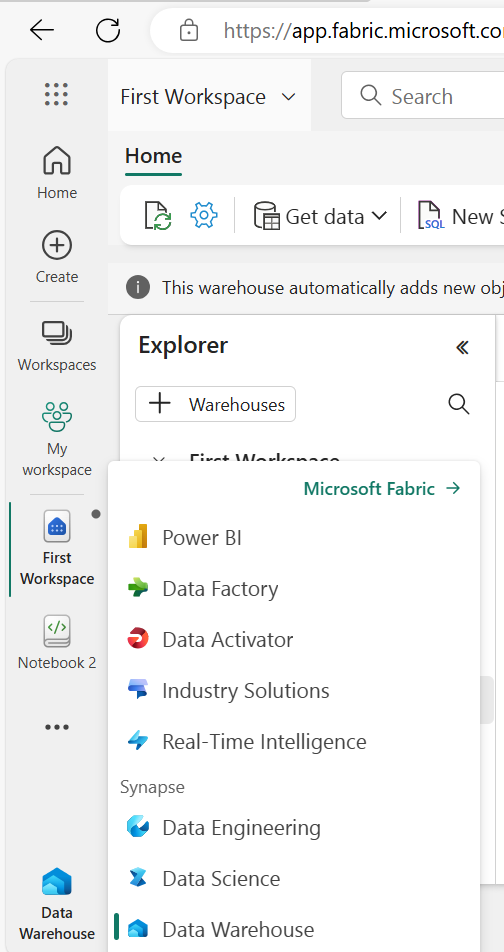
To create a data warehouse in Fabric, simply navigate to the Fabric portal and select the Data warehouses option. From there, you can create a new data warehouse by specifying a name, selecting a performance level, and configuring other settings as needed.
Once your data warehouse is created, you can use T-SQL to query and analyze your data. Fabric supports a wide range of T-SQL commands, including SELECT, INSERT, UPDATE, DELETE, and more.
Data Integration in Fabric
In addition to its data warehousing capabilities, Fabric also offers powerful data integration features. With Fabric, you can easily connect to a wide range of data sources, including on-premises databases, cloud-based data stores, and SaaS applications.
Fabric also offers built-in support for data integration tools like Azure Data Factory, which enables you to create and manage data pipelines with ease. With Data Factory, you can automate the process of data integration, making it easy to keep your data warehouse up-to-date with the latest data from your sources.
Security in Fabric
Security is a top priority in Fabric, and the platform offers a wide range of features to help ensure the safety and security of your data. With Fabric, you can use features like private link support, encryption at rest and in transit, and role-based access control to protect your data and ensure that only authorized users can access it.
Conclusion
In conclusion, Microsoft Fabric offers a powerful data warehousing solution that is built on top of Azure Synapse Analytics. With Fabric, you can easily create and manage data warehouses, query and analyze your data with T-SQL, integrate data from a wide range of sources, and ensure the security and safety of your data.
If you're looking for a comprehensive data platform that can handle all of your data warehousing needs, Microsoft Fabric is definitely worth considering.
Thank you for reading!
Best regards,
Aayush Gupta